|
My goal in establishing The Actors Safehouse was to help actors stop working so hard. We've all 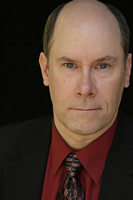 seen actors "acting," and if we're honest, we all catch ourselves doing it from time to time. I offer actors the opportunity to discover when they're trying too hard to create the illusion of reality. I then offer practical usable techniques designed to gain the confidence to do less on camera, and let reality happen. seen actors "acting," and if we're honest, we all catch ourselves doing it from time to time. I offer actors the opportunity to discover when they're trying too hard to create the illusion of reality. I then offer practical usable techniques designed to gain the confidence to do less on camera, and let reality happen.
I like to target different aspects of film and television acting when I work with actors, such as close-ups, eye contact, listening, non-dialogue scenes, etc. When actors sign up for a workshop, they choose the target they want to work on (see the list of targets to the right), then when they arrive, they are given a scene to prepare for filming that has been specifically selected for them. After all filming is completed, the group watches the footage. Actors also practice on-camera auditioning in every workshop, for which they are emailed audition sides 24 hours in advance; this gives them the same amount of prep time they usually have before an audition in the real world. In my workshops, every actor works in front of the camera twice a night.
I hope you'll join us for an evening of on-camera exploration!

Michael Merton has been a working actor for nearly thirty years. He has appeared on such television shows as Men of a Certain Age, Brothers & Sisters, FlashForward, Grey's Anatomy, House, Desperate Housewives, Criminal Minds, Pushing Daisies, It's Always Sunny in Philadelphia, Two and a Half Men, Las Vegas, King of Queens, Will & Grace, Everybody Hates Chris, Malcolm in the Middle, and many more. Michael is also an accomplished writer of television animation, with two Emmy Award nominations to his credit. He has worked on a wide variety of television cartoons including X-Men: Evolution, Buzz Lightyear of Star Command, Hercules, Tarzan, 101 Dalmations, Krypto the Superdog, Brandy & Mr. Whiskers, Casper, Tutenstein, and Pinky Dinky Doo, to name just a few.
Michael considers himself blessed to be able to call himself a professional actor. He truly loves being an actor and also loves to share what he has learned about the craft of acting with others. Michael created The Actors Safehouse to provide an affordable opportunity for actors to hone their on-camera skills in a safe and supportive environment.
You can find out more about Michael on the following websites:
MichaelMerton.com
The Internet Movie Database
|
Workshop Targets
I like to target different aspects of film and television acting when I work with actors. When they reserve a spot in a workshop, they choose a target they want to work on:
• Closeups
Q: Why are actors terrified of closeups? A: Because the audience might see them acting. But you're not supposed to be acting. This acting exercise is all about being truthful in a tight closeup, and trusting that if you focus on feeling your emotions, they will show on your face.
• Eye Contact
Actors explore how not making eye contact is almost always more realistic and more interesting than locking eyes with a scene partner.
• Throwing It Away
Has a casting director ever told you to just "throw it away?" Actors are given sides in which their character swiftly rattles off a mouthful of dialogue (expository information to further the story, fast-paced comedy speeches, etc.) This challenges you to trust that the story is told by the words you are saying, not by the way you say them.
• Intensity
Fighting, confronting, challenging... shouting, screaming, crying... we actors love to cut loose with over-the-top emotions. But do you look natural and truthful on-camera? Or do you just look over-the-top?
• Nothing to Say
This is a solo exercise in which an actor plays out a scenario containing no dialogue whatsoever. Their character performs a lengthy ordinary task, then incorporates an emotional "turn" in the scenario. This night is about letting go of the responsibility of being entertaining, and just being truthful.
• Hitting Marks
Scenes are played standing to allow actors to practice both entering the shot and hitting their marks, and also keeping still during their scene partner's over-the-shoulder shot.
• Working Hands-Free
Scenes are played standing and actors are not allowed to use their hands for any emphasis, gesturing, etc. It's all about relaxing physically and realizing that the focus on your character's face becomes stronger, and your character becomes stronger, too.
• Overlapping Dialogue
In real life conversations, people start speaking before the other person has finished, but in film, you can only do that in a master shot, or else the editor can't use the shot. Actors practice the awkward cinematic necessity of abruptly stopping their lines in mid-sentence, as if interrupted.
• Blinking
Blinking during a closeup, or moving your eyes at all, can make your character seem weak, nervous, and even downight psychotic. Actors explore how even the slightest eye movement can completely change their performance.
• Auditioning Night
This is the only target that has its own special night. All actors in attendance participate. From big speeches to under-5's, actors audition on camera several times, then compare how their fellow actors performed the same material. This night is about exercising your auditioning muscle, and exploring tips and tricks to make you look your best on playback.
• Environment
The more real your environment is to you, the more real you will be in the scene you're playing. Actors are given multiple locations for the same scene in order to imagine the new setting and explore how their character's behavior in the new setting alters their performance.
• Mumbo-Jumbo
Actors receive sides containing the kind of dialogue mumbo-jumbo that they are expected to rattle off effortlessly in legal dramas, medical dramas, forensic procedural dramas, etc.
• Villainy
Mean bosses, cranky neighbors, vicious criminals... actors portray villainous characters, and explore how avoiding the obvious choices can actually make your "heavy" more powerful, intimidating, and downright frightening.
• Comedy
This exercise is about cutting loose with outrageous comedy material, and then exploring how the same scene can be funny in an entirely different way when one aims for realism.
• Special Tactics
Actors tackle all kinds of technical performance challenges, such as being drunk, developmentally disabled, out of breath, getting shot, etc.
• Listening
When another actor is speaking, are you truly listening to them, or are you trying to convince the audience that you're listening to them? Explore the most fundamental element of acting.
• Steadicam Work
Discovering that a scene will be shot with a mobile camera can be unsettling for actors. In this exercise, on-camera scenes are played out with realistic action and physical relationships between the characters, with the camera following the actors as they move. How does your performance change if you don't know where the camera is going to be?
• ...and more new targets
all the time!
|